
Blog
Residential Cleaning in Charleston: A Practical Guide to Recurring, Deep, and Move-In Services
Residential cleaning is the planned cleaning of a home’s living spaces, kitchens, bathrooms, bedrooms, and other agreed areas to maintain a usable, hygienic property. In Charleston, that can mean a recurring visit for a busy household, a one-time reset before guests arrive, a detailed deep clean, or a move-in or move-out service. The important distinction is not simply how long a cleaner stays. It is the scope, sequence, and condition of the home being serviced.
A useful cleaning plan answers four practical questions before anyone arrives: Which rooms are included? Which tasks matter most in those rooms? What condition is the property currently in? What work is outside the service’s scope? Answering those questions prevents the most common mismatch: a customer expecting restoration or organizing when the booked service is routine cleaning.
What Residential Cleaning includes—and what it does not
Residential cleaning is a service category, not one universal checklist. A recurring visit usually protects baseline cleanliness. A deep clean allocates more attention to accumulated soil and neglected details. A move-in or move-out clean focuses on an empty or nearly empty property and the surfaces that need to be ready for the next occupant.
The service is built around surfaces and tasks
Professional cleaners generally organize work by room and by surface rather than treating the whole home as one undifferentiated job. A kitchen may require attention to counters, the sink, the cooktop, cabinet fronts, appliance exteriors, floors, and touchpoints. A bathroom may require the shower or tub, toilet, vanity, mirror, floor, and reachable fixtures. Bedrooms and living rooms may emphasize dusting, vacuuming, floors, and visible surfaces.
That structure matters because a home can look tidy while still needing meaningful cleaning. Clutter may hide surfaces, grease may cling to a backsplash, and dust may collect on ledges or ceiling-fan blades. A cleaner needs a workable route through the home and enough access to the surfaces included in the appointment.
- Recurring cleaning: maintains an agreed baseline on a weekly, biweekly, or other repeating schedule selected by the household.
- Deep cleaning: gives additional attention to buildup, reachable detail areas, and spaces that have not been maintained recently.
- Move-in cleaning: prepares an empty or mostly empty property before furniture and belongings make surfaces harder to reach.
- Move-out cleaning: concentrates on leaving the property presentable after belongings have been removed, subject to the provider’s stated scope.
- One-time residential cleaning: addresses a defined occasion, such as hosting, returning from travel, or resetting a home before beginning a recurring schedule.
Cleaning is different from repair, restoration, and organization
A cleaning appointment is not automatically a mold-remediation project, pest-control visit, renovation cleanup, junk-removal service, or handyman repair. Stained grout may require a different treatment than ordinary surface soil. Water damage may need its source corrected before cleaning is useful. A broken range hood, damaged flooring, or peeling paint remains a maintenance issue even if the surrounding area is cleaned.
The distinction is especially important for mold concerns. The CDC explains that mold can cause health effects for some people and recommends addressing moisture problems rather than treating visible growth as a purely cosmetic issue; its mold guidance is available on the CDC’s official mold health page. A cleaner can clarify whether ordinary cleaning is appropriate, but the property owner may need a qualified specialist when the problem involves persistent moisture, extensive growth, concealed areas, or damaged building materials.
Organizing is another separate decision. A cleaner may need clear access to a counter or floor, but sorting papers, deciding what to discard, and creating storage systems are not automatically part of a cleaning scope. State the difference before booking so a service designed to clean surfaces is not judged against an unrequested organizing project.
Why the right scope matters
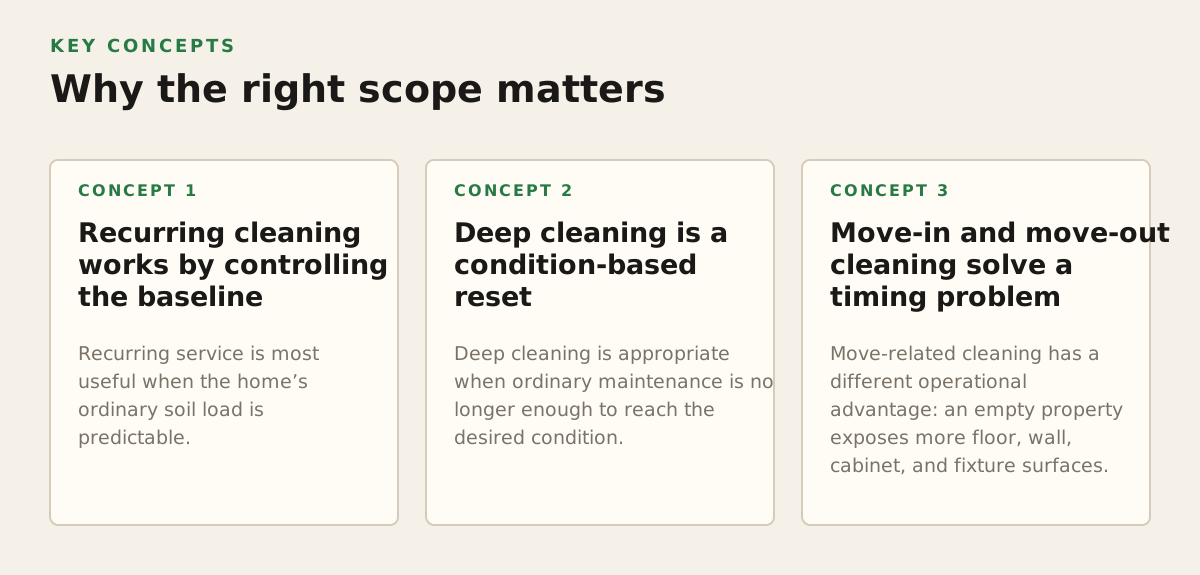
The value of residential cleaning is not just a visibly nicer room. A well-defined service reduces the recurring labor a household must absorb, makes the condition of a property easier to manage, and directs effort toward the surfaces that matter for the occasion. The wrong scope can produce the opposite result: a home receives a reasonable service, but the customer still feels the appointment failed because the requested outcome was never defined.
Recurring cleaning works by controlling the baseline
Recurring service is most useful when the home’s ordinary soil load is predictable. A schedule creates a maintenance rhythm: dust, crumbs, bathroom residue, and ordinary tracked-in dirt are handled before they become a large reset. The first visit may need more attention than later visits if the home has been neglected, contains heavy buildup, or has not previously followed a maintenance routine.
This does not mean every recurring appointment is identical. A household with pets, young children, frequent cooking, muddy entryways, or high occupancy may need a different priority order than a lightly used second home. A useful recurring plan identifies the rooms that must be completed every visit and the lower-priority tasks that can rotate or be added when appropriate.
- High-use rooms: kitchens, main bathrooms, entryways, and the living area usually deserve first priority when time or access is limited.
- High-touch surfaces: handles, switches, faucet levers, and appliance pulls may need attention because many people contact them during normal use.
- Soil-producing areas: cooking zones, pet-feeding areas, mudrooms, and children’s activity spaces can require a different order of work.
- Low-use rooms: guest rooms and formal spaces may be included while receiving less frequent detail attention, depending on the plan.
The CDC distinguishes routine cleaning from disinfection and notes that cleaning with soap or detergent removes dirt and many germs from surfaces; disinfection is a separate step used when appropriate. The current household guidance is available through the CDC’s cleaning and disinfection recommendations. For an ordinary recurring visit, that distinction helps prevent an unrealistic assumption that every surface will receive a disinfectant treatment regardless of need, material, or product instructions.
Deep cleaning is a condition-based reset
Deep cleaning is appropriate when ordinary maintenance is no longer enough to reach the desired condition. It may be the first service before recurring visits, a seasonal reset, preparation for a gathering, or a response to months of uneven upkeep. The phrase should still be tied to an actual scope. “Deep” does not mean every item in the home is removed, repaired, polished, or restored.
For example, a deep-clean request might prioritize baseboards, reachable light fixtures, doors and trim, cabinet fronts, bathroom detail, accumulated kitchen residue, and neglected floor edges. A customer with a different concern may prioritize pet hair, interior windows, or a specific room. The most useful booking conversation identifies the visible problem rather than relying on the label alone.
For a Charleston household considering a one-time reset, see the service details for deep cleaning in Charleston. The practical question is whether the home needs a reset before maintenance begins, not whether “deep” sounds more thorough in the abstract.
Move-in and move-out cleaning solve a timing problem
Move-related cleaning has a different operational advantage: an empty property exposes more floor, wall, cabinet, and fixture surfaces. Furniture and boxes create access barriers, so the same home can require a different approach once it is vacant. The best time to schedule service depends on access, utility availability, construction status, and the agreement between the parties involved.
A move-out clean should not be treated as a guarantee that a landlord will waive every charge or that a property will pass an inspection. Deposit decisions can involve damage, wear, missing items, lease terms, and conditions beyond ordinary cleaning. A move-in clean is also not a substitute for inspecting the home for leaks, pests, unsafe electrical conditions, or unfinished work.
How a Residential Cleaning visit works
A reliable process begins before the cleaner enters the home. The goal is to convert a broad request into a sequence of manageable tasks, then use the available time where it has the greatest effect. This is why a flat-rate service still benefits from clear information: a price can be simple for the customer while the underlying work remains dependent on rooms, condition, access, and requested detail.
Step 1: define the property and occasion
Start with the facts that change the work: approximate home size, number of bedrooms and bathrooms, whether the home is furnished, occupancy, pets, current condition, and the reason for service. “I need a deep clean” is less useful than “the kitchen has months of grease buildup, the primary bathroom needs detail work, and I want recurring maintenance afterward.”
For a multi-home owner or property manager, record each address separately. A similar floor plan does not guarantee a similar condition. One property may be between tenants, another may contain furniture, and a third may need special attention after repairs. A property-by-property scope is more dependable than copying one checklist across every home.
Step 2: set priorities instead of promising everything
If the home is large or the appointment has a fixed scope, priorities protect the outcome. Separate must-have work from desirable extras. This is not a shortcut; it is a way to prevent the final hour from being spent on low-impact details while a high-use bathroom remains unfinished.
- Illustrative example: for a three-bedroom, two-bath home, make both bathrooms, the kitchen, and the main living area the first four priorities.
- Illustrative example: if a home has two children’s rooms but only one is currently occupied, identify whether both require full service or whether one needs only vacuuming and visible dusting.
- Illustrative example: for a move-out property with four bedrooms, specify whether inside cabinets, interior appliances, and reachable windows are included rather than assuming they are automatic.
- Illustrative example: for a property manager with six homes, mark each address as recurring, turnover, or one-time so the crews are not given one generic instruction.
These numbers are illustrative planning examples, not universal service thresholds. Actual scope depends on the provider’s checklist, home condition, access, and the service selected.
Step 3: prepare access and the work surface
Preparation should remove obstacles, not create extra work for the household. Put away medication, cash, important papers, jewelry, and fragile personal items. Secure pets according to the household’s routine. Identify rooms that are off limits and communicate how the cleaner will enter and where supplies or utilities are located.
- Clear floors and countertops where possible so the cleaner can reach the surfaces being requested.
- Load or empty dishes if the sink and counters are part of the scope; dishwashing is not automatically included.
- Move small personal items from shower ledges, bathroom counters, and bedside tables.
- Identify delicate materials, stone surfaces, specialty finishes, or appliances that require product restrictions.
- Provide working water, electricity, lighting, and safe access unless another arrangement has been confirmed.
Preparation is a trade-off. Clearing a countertop may improve cleaning access, but asking a household to empty every cabinet or dismantle furniture can exceed what is reasonable for a routine appointment. Define the access needed for the selected tasks rather than treating preparation as an unlimited pre-cleaning obligation.
Step 4: clean from higher and cleaner areas toward lower and dirtier areas
A practical sequence limits rework. Dusting a high surface after vacuuming the floor can put debris back where it was just removed. Cleaning a bathroom vanity before wiping a dirty mirror can create another pass. The exact route varies, but the mechanism is consistent: complete tasks in an order that avoids transferring soil into finished areas.
Cleaning products also need material awareness. The EPA’s Safer Choice product information explains the program’s approach to identifying products and ingredients that meet its criteria. That does not mean every product is suitable for every surface, and a label or manufacturer instruction remains important. Natural stone, unsealed wood, painted finishes, electronic equipment, and specialty coatings can react differently to moisture or chemicals.
Step 5: inspect against the agreed scope
The final check should ask whether the included rooms and tasks were completed, not whether the home has been transformed into a different property. Look at the edges of floors, obvious streaks, missed touchpoints, soap residue, and surfaces that were blocked during the visit. If something was inaccessible or outside scope, document that clearly rather than presenting an ambiguous “done.”
| Service situation | Primary objective | Decision that matters most |
|---|---|---|
| Recurring household cleaning | Keep ordinary soil from accumulating | Which rooms and tasks repeat every visit? |
| One-time deep cleaning | Reset neglected or buildup-prone areas | Which condition problems deserve priority? |
| Move-in cleaning | Make an empty property ready for occupancy | When is the property accessible and free of trades or belongings? |
| Move-out cleaning | Leave agreed surfaces clean after vacancy | What does the lease, owner, or manager specifically require? |
| Multiple-property service | Apply consistent standards across addresses | How will each home’s condition and scope be recorded? |
Where Residential Cleaning plans break down
Most dissatisfaction comes from a gap between the requested outcome and the operating conditions, not from the existence of a checklist. A strong plan makes limitations visible early. That gives the customer a choice: reduce scope, change the service, prepare the home, or involve another type of professional.
Condition is heavier than the selected service
Routine cleaning may not be the right first visit when surfaces have long-term buildup, excessive clutter, heavy pet hair, or residue from construction. If a maintenance visit is asked to perform a reset, the cleaner must either leave lower-priority work incomplete or rush through every area. Neither outcome is a sound definition of success.
A practical response is to book a one-time reset first, then establish recurring maintenance. If the household cannot address every room at once, identify the rooms that affect daily life most. Kitchens and bathrooms often have higher consequence than a lightly used guest room, but that is a prioritization decision rather than a universal rule.
Access and safety can stop otherwise reasonable work
Blocked floors, unstable furniture, exposed needles, active pests, severe odors, sewage, broken glass, and unsafe ladders can change what is feasible. Cleaners should not be expected to move heavy items without agreement or enter areas where the risk cannot be controlled. A property with ongoing construction may also need final dust removal after trades have completed their work rather than ordinary house cleaning during the project.
Product handling is another boundary. OSHA’s Hazard Communication information describes employer responsibilities related to chemical hazards, labels, safety data, and worker information. For a homeowner, the practical takeaway is simple: do not transfer unidentified chemicals into unlabeled bottles or ask a cleaner to use a product without disclosing what it is. Product identity and surface compatibility are part of safe execution.
- Pause and clarify: unknown chemicals, fragile finishes, active leaks, or areas that cannot be safely accessed.
- Change the service: extensive clutter, post-construction dust, large amounts of waste, or conditions requiring specialized equipment.
- Use another professional: suspected asbestos, significant mold, pest infestation, sewage contamination, or building damage.
- Document the exception: rooms skipped, surfaces blocked, owner instructions, and work that remains outside the agreed scope.
Disinfection expectations are often too broad
Some households use “sanitize,” “disinfect,” and “clean” as interchangeable terms, but they involve different claims and product instructions. Disinfectants are regulated products with label directions, including required contact time and approved uses. The EPA maintains an official list of selected EPA-registered disinfectants and related registration information; an ordinary cleaner should not be represented as a disinfectant merely because it removes visible dirt.
For residential service, ask whether the requested outcome is visible cleanliness, routine soil removal, or targeted disinfection of specific surfaces. Do not assume every room needs the same treatment. Materials, ventilation, occupant sensitivities, and the product label all matter. If someone in the household is medically vulnerable, coordinate cleaning expectations with their healthcare guidance rather than relying on a general marketing label.
Move-out cleaning cannot solve a property dispute
A move-out service can address agreed cleaning tasks, but it cannot prove that a tenant caused or did not cause damage. Photographing the property before and after cleaning may help a household keep records, but it is not a substitute for the lease, inspection report, or communication with the owner. Cleaning also cannot correct missing smoke detectors, damaged blinds, wall holes, appliance defects, or other maintenance issues unless a separate service covers them.
How Charleston households can apply the framework
Choosing a residential cleaning service in the Charleston area becomes easier when the decision starts with the property’s next use. A busy family usually needs a dependable maintenance baseline. A household facing guests or a neglected home needs a reset. A renter needs a clearly documented turnover scope. A property manager needs repeatable instructions that still account for differences between addresses.
Choose the service by the job to be done
- Choose recurring cleaning when the home is already near the desired baseline and the main problem is keeping up with ordinary household work.
- Choose a one-time or deep clean when buildup, neglected detail areas, or a long gap in service means maintenance alone will start too far behind.
- Choose move-in cleaning when the property is vacant or nearly vacant and needs to be ready before furniture and daily routines arrive.
- Choose move-out cleaning when belongings are removed and the next step is turnover, inspection, listing, or handoff.
- Request a scope review when the home has construction dust, heavy clutter, moisture damage, pest concerns, unusual materials, or multiple addresses.
For homeowners comparing local options, the service page for house cleaning in Charleston is a useful starting point for understanding a recurring or one-time residential visit. The decision should still be based on the stated checklist and the property’s actual condition rather than on the service name alone.
Build a repeatable plan for more than one property
Owners and managers of several homes need consistency without pretending that every home is identical. Create a short property record for each address that includes access instructions, flooring and surface notes, priority rooms, turnover status, special restrictions, and the date of the last service. Keep exceptions attached to the address rather than relying on memory or scattered messages.
A simple operating policy can use three levels: standard recurring scope, turnover scope, and exception scope. The first handles maintenance. The second handles vacancy and handoff. The third flags work that needs approval or another provider. This prevents an expensive mistake in which a cleaner arrives expecting a routine visit while a property is still full of boxes, contractors, or disposal items.
Ask questions that produce an actionable answer
Before booking, ask what rooms are included, what happens when a surface is inaccessible, whether inside appliances or cabinets are part of the selected service, how pets should be handled, and how special materials should be identified. Also ask how the provider presents pricing and whether the customer can review the scope before committing. BeeLux Cleaning provides flat-rate residential house cleaning, deep cleaning, and move-in or move-out cleaning in Charleston and surrounding Lowcountry communities, with online booking and pricing shown before commitment, according to the supplied service information.
For a Charleston-area household, the strongest recommendation is to choose the smallest service that can realistically produce the desired condition, then state the priority rooms and exceptions before the appointment. If the home needs ongoing maintenance, use recurring service after the baseline is established; if it needs a reset or turnover, begin with the appropriate one-time scope. BeeLux Cleaning offers online booking for BeeLux Cleaning, including one-time and recurring options.
Authored with NotFair SEO