
Blog
Residential Cleaning Checklist: A Practical Guide for Charleston Homes
A useful residential cleaning checklist does more than name rooms: it tells you what to clean first, how often each task belongs on the schedule, and when a one-time deep clean or professional service is more sensible than another weekend of catch-up. For a Charleston home, start with kitchens, bathrooms, floors, dust-collecting surfaces, and high-touch points; then adjust the list for recurring upkeep, a move, pets, allergies, or a vacant property.
This guide is designed to help homeowners, renters, busy families, and property managers turn a vague “the house needs cleaning” problem into a defined job. Use the framework to build a repeatable household routine, prepare a home for a new occupant, or give a cleaning company a precise scope before booking.
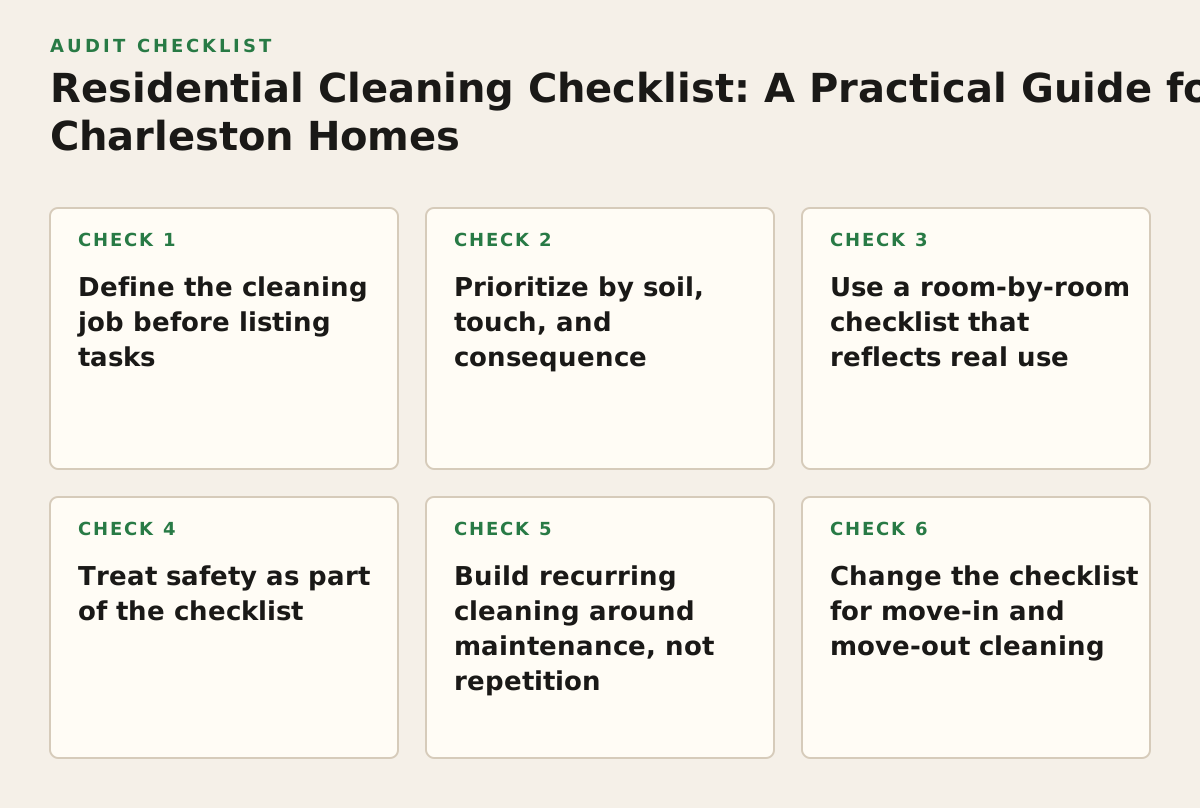
1. Define the cleaning job before listing tasks
The first decision is not whether to wipe the baseboards. It is which condition the home needs to reach. A maintenance clean preserves an already orderly home. A deep clean addresses accumulated soil and overlooked areas. A move-out clean prepares an empty property for inspection, listing, handoff, or the next occupant.
This distinction works because cleaning time is limited. If you treat every visit as a deep clean, recurring service becomes inefficient and expensive in effort. If you treat a heavily soiled or recently renovated home as routine maintenance, the visible result may fall short even though many tasks were completed.
Choose the service level
- Recurring residential cleaning: prioritize bathrooms, kitchen surfaces, floors, dust-prone areas, and obvious touch points.
- One-time deep cleaning: add buildup, edges, high surfaces, doors, fixtures, detailed dusting, and neglected areas.
- Move-in cleaning: clean inside cabinets, drawers, closets, appliances, and other areas before belongings make access difficult.
- Move-out cleaning: work from the property’s empty condition and focus on residue, floors, fixtures, appliances, and inspection-visible details.
Failure mode: combining every possible task into one undifferentiated checklist creates a long list nobody finishes. The practical fix is to mark each task as every visit, rotating, or one-time condition reset.
Example: a family booking recurring service might place shower walls, toilets, kitchen counters, sink, floors, and visible dusting in the every-visit group. Inside the oven, ceiling fans, baseboards, and cabinet fronts can be assigned to a first-time deep clean or a rotating schedule.
2. Prioritize by soil, touch, and consequence
Room order should follow the mechanism of cleaning, not simply the floor plan. Begin with work that releases dust or debris, move toward wet cleaning, and finish with floors. Within each room, clean high to low and clean to dirty so particles do not land on finished surfaces.
Prioritization also depends on consequence. A sticky kitchen floor affects daily use, a dirty toilet affects sanitation, and dusty crown molding is usually less urgent. That does not make low-visibility work irrelevant; it means the checklist should distinguish health and function from appearance so a short visit still produces a useful result.
A practical room sequence
- Open blinds or curtains where appropriate, collect clutter, and remove items that block surfaces.
- Dust or vacuum upper surfaces, corners, vents, furniture tops, and edges.
- Clean kitchen and bathroom fixtures, counters, sinks, and other wet areas.
- Spot-clean doors, switches, handles, and fingerprints.
- Vacuum or sweep floors, then mop hard flooring using the correct product for its finish.
- Replace towels, return agreed items, and inspect from the doorway for missed visible soil.
Failure mode: mopping first and then dusting shelves leaves fresh debris on the floor. Another common mistake is moving clutter from one surface to another without a designated holding area. Set a basket or box for items that belong elsewhere, but do not make permanent storage decisions during a cleaning visit.
Example: in a three-bedroom home, work through bedrooms and living areas with dry dusting and vacuuming before wet-cleaning the kitchen and bathrooms. Finish all floors together, beginning with the cleanest rooms and ending with the entry or other highest-traffic area.
3. Use a room-by-room checklist that reflects real use
A checklist becomes operational when each room has a short core set and a separate detail set. The core set protects the home’s daily function. The detail set captures tasks that matter during a deep clean, a seasonal reset, or a move.
| Area or situation | Prioritize first | Add when condition or timing requires it | Useful handoff note |
|---|---|---|---|
| Kitchen | Counters, sink, stovetop, cabinet fronts, floor, handles | Inside oven, refrigerator, microwave, cabinets, backsplash buildup | Identify whether appliances are empty and cool |
| Bathrooms | Toilet, sink, mirror, shower or tub, fixtures, floor | Grout detail, exhaust cover, cabinet interiors, scale removal | Note delicate stone, aged grout, or damaged caulk |
| Bedrooms and living rooms | Dusting, vacuuming, reachable surfaces, visible fingerprints | Under furniture, fan blades, baseboards, blinds, upholstery vacuuming | Clear personal items and identify furniture that should not move |
| Entryways and stairs | Vacuuming, mopping, doors, rails, switches | Edges, scuff marks, tracks, cobweb removal | Keep walkways open while work is underway |
| Move-in or move-out | All accessible surfaces in an empty home | Cabinets, closets, drawers, appliances, windowsills, wall marks | Confirm whether the goal is inspection, listing, or personal occupancy |
Kitchen and bathroom controls
Kitchens and bathrooms deserve disproportionate attention because moisture, grease, body oils, and frequent handling create different soils. In a kitchen, allow the product appropriate to the surface to dwell as directed rather than wiping immediately. In a bathroom, remove loose soil before applying a cleaner to fixtures or tile.
For routine household cleaning, sanitizing every surface is not automatically necessary. The CDC’s home-cleaning guidance explains that cleaning removes dirt and many germs, while disinfecting is a separate step that may be appropriate when someone is sick or at higher risk. Follow the product label when disinfection is needed.
Failure mode: using one product on every surface can damage natural stone, finished wood, specialty metals, or painted materials. Make a surface note before starting: “sealed stone,” “wood finish,” “stainless,” or “unknown.” If the material is unknown, test an inconspicuous area or defer the treatment until it can be identified.
Example: for a kitchen reset, clear the counter, remove crumbs, clean the sink and faucet, degrease the stovetop with a compatible product, wipe cabinet fronts and handles, then vacuum edges before mopping. Do not include the inside of a refrigerator unless it is empty and the scope specifically includes it.
4. Treat safety as part of the checklist
Cleaning quality is not just visible shine. It also depends on using chemicals, tools, and ventilation in a controlled way. Read labels, keep products in their original containers, use the protective equipment the label calls for, and provide ventilation when appropriate.
The Occupational Safety and Health Administration’s cleaning-industry guidance identifies chemical exposure, slips, falls, and ergonomic strain as hazards that need controls. For a household checklist, that translates into practical rules:
- Never mix products, especially bleach with ammonia or acidic cleaners.
- Keep cords, buckets, and wet-floor areas away from children, pets, and pass-through routes.
- Use a stable step stool rather than a chair for reachable high surfaces.
- Do not spray directly into electronics, outlets, ventilation openings, or delicate controls.
- Pause and identify unknown residue, mold-like growth, pests, bodily fluids, or damaged materials before proceeding.
Disinfectants require particular care. The U.S. Environmental Protection Agency’s disinfectant information emphasizes using registered products according to their approved label directions. The label controls contact time, surface suitability, application method, and required precautions; a quick spray-and-wipe may not perform as intended.
Failure mode: “stronger” is treated as better. Excess product can leave residue, damage finishes, increase fumes, and still fail to meet the label’s required contact time. Use the least aggressive suitable method, and escalate only when the soil or health situation justifies it.
Example: if a household member has been ill, separate ordinary cleaning from targeted disinfection, follow the product directions, and wash hands after removing gloves. If a shower has heavy mineral scale, use a compatible descaler only after checking the fixture and tile material rather than reaching automatically for bleach.
5. Build recurring cleaning around maintenance, not repetition
Recurring service works best when every visit has a stable baseline and some tasks rotate. Stable tasks prevent decline in the areas people use daily. Rotating tasks prevent neglected details from becoming a large deep-cleaning project.
Set a three-layer schedule
- Each visit: bathrooms, kitchen work surfaces, high-traffic floors, visible dust, and touch points.
- Periodic rotation: baseboards, doors, blinds, fan blades, reachable vents, detailed edges, and under accessible furniture.
- As-needed reset: inside appliances, cabinet interiors, heavy buildup, post-party cleanup, post-renovation dust, or pet-related odor work.
The exact frequency depends on occupancy, pets, cooking, allergies, flooring, and how much clutter blocks access. A home with children, pets, or frequent guests may need more attention to floors and touch points. A lightly occupied home may shift effort toward dusting and bathrooms.
Failure mode: the checklist never changes even when the home’s condition does. Review it after a holiday gathering, a season of high humidity, a new pet, a renovation, or a change in household schedule. If the same item is repeatedly skipped because furniture or belongings block it, change the preparation rule rather than pretending it is complete.
Example: a Charleston household might keep kitchen grease, bathroom moisture, entryway sand or soil, and pet hair in the baseline group, then rotate ceiling fans, baseboards, blinds, and under-bed vacuuming. This preserves predictable results without asking every visit to perform a full deep clean.
6. Change the checklist for move-in and move-out cleaning
An empty property creates access that an occupied home does not. That makes a move the right time to clean inside cabinets, drawers, closets, appliances, behind doors, and along otherwise blocked edges. It also creates a clear inspection standard: the next person should not inherit visible residue or debris.
For move-out cleaning, remove personal belongings and trash first. Then work from the top of the property downward, cleaning rooms systematically and reserving floors for the end. Photograph or document pre-existing damage separately; cleaning cannot repair chipped paint, broken blinds, damaged flooring, or failed caulk.
Move checklist
- Confirm the home is vacant or identify which rooms and storage areas remain occupied.
- Empty and inspect cabinets, drawers, closets, refrigerator, oven, and other included appliances.
- Clean doors, handles, switches, trim, windowsills, and visible wall marks using compatible methods.
- Remove dust and debris from corners, stair edges, floor transitions, and accessible spaces under appliances.
- Check bathrooms for hair, residue, scale, and overlooked fixtures.
- Finish floors after all overhead and surface work is complete.
Failure mode: booking a move-out clean before the property is empty. Boxes, furniture, and leftover materials reduce access and turn a clear scope into an uncertain one. If the property cannot be emptied, label the job as a partial clean and identify blocked areas in advance.
Example: a renter preparing for a landlord walkthrough can prioritize the oven, refrigerator, cabinets, bathroom fixtures, floors, doors, and visible marks. A homeowner moving into a previously occupied property may prioritize cabinet interiors, drawers, closets, appliances, and high-touch surfaces before unloading boxes.
7. Decide when to outsource instead of expanding the list
Outsourcing is useful when the constraint is not knowledge but time, access, scale, or consistency. A household may know how to clean a bathroom yet still need help before guests arrive, after a move, or when several rooms have accumulated detail work at once. Property owners and managers face a related problem: the checklist must be repeatable across homes, not dependent on one person remembering every exception.
Before requesting a quote or booking, prepare a concise scope:
- Property type, approximate size, bedrooms, bathrooms, stairs, and occupied or vacant status.
- Service goal: recurring maintenance, deep cleaning, move-in, move-out, post-event, or another defined need.
- Priority rooms and specific inclusions such as inside appliances, baseboards, blinds, or cabinets.
- Constraints including pets, delicate surfaces, access instructions, parking, alarm procedures, or areas not to enter.
- Condition notes such as heavy grease, excessive clutter, renovation dust, or suspected mold.
Do not assume that “deep cleaning” means every possible specialty task. Ask what is included, what requires an additional assessment, and what preparation the household must complete. This prevents the most common service mismatch: a customer expecting restoration-level work while the provider is scheduled for standard residential cleaning.
For local recurring needs, review the options for house cleaning in Charleston. For a home that needs a more thorough reset before maintenance begins, compare the scope of deep cleaning in Charleston.
Failure mode: choosing a provider based only on a short label rather than the actual scope. The remedy is to send the checklist, photos when appropriate, and a prioritized “must be done” list before committing.
Example: a property manager overseeing several Lowcountry homes can use the same baseline checklist for every visit, then attach property-specific notes for flooring, appliances, access, and inspection priorities. That creates a handoff document rather than a verbal memory test.
Implementation plan: turn the checklist into the next action
- Classify the job. Choose recurring maintenance, deep cleaning, move-in, move-out, or a special reset.
- Walk the property once. Note soil, clutter, access barriers, delicate surfaces, pets, and areas that need more than routine cleaning.
- Mark priorities. Separate must-do tasks from rotating details and optional extras.
- Prepare the home. Clear counters, secure valuables and medications, remove belongings from included areas, and provide access instructions.
- Execute in sequence. Work high to low, dry before wet, clean to dirty, and floors last.
- Inspect against the scope. Check kitchens, bathrooms, entryways, floors, and any specifically requested detail before considering the job complete.
- Set the next interval. Keep the baseline for recurring visits, rotate neglected details, or schedule a deeper reset when the condition warrants it.
If the checklist shows that your Charleston home needs a defined, one-time reset or dependable recurring upkeep, BeeLux Cleaning can help you compare the appropriate residential cleaning service before you commit.
Authored with NotFair SEO