
Blog
Professional Deep Cleaning Services: A Practical Guide for Charleston Homes
Professional deep cleaning services are designed for homes that need more than routine surface maintenance: accumulated soil removed from kitchens and bathrooms, reachable high and low areas addressed, and neglected details brought back into a manageable condition. For Charleston homeowners, renters, families, and property managers, the right service depends on whether the home needs a one-time reset, preparation for a move, or a repeatable cleaning plan.
What Professional Deep Cleaning Services Actually Include
“Deep cleaning” is not a universal technical standard. It is a scope of work, and the scope varies by company, property condition, and service category. A useful definition is more detailed cleaning of accessible surfaces and buildup-prone areas than a recurring maintenance visit. It should explain what gets cleaned, what requires an add-on, and what the cleaner cannot safely or reasonably restore.
A standard recurring visit usually protects an already-maintained home. A deep clean addresses the backlog that routine visits may not have time to handle. That can include soap residue around bathroom fixtures, grease on cabinet fronts, dust on trim and doors, buildup around toilets, and detailed attention to reachable edges and corners.
The service is not the same as remediation, restoration, or repair. Professional cleaners generally should not promise to remove hidden mold, repair water damage, strip hazardous contamination, clean inside sealed mechanical systems, or restore permanently etched glass. The U.S. Environmental Protection Agency advises that mold control depends on correcting moisture as well as cleaning affected areas; its guidance is a useful boundary between ordinary cleaning and a moisture or remediation problem. EPA mold cleanup guidance explains that larger or persistent problems may require specialized evaluation.
The main service categories
- One-time deep cleaning: A reset for a home that has been busy, neglected, recently renovated, or simply needs detailed attention before recurring service begins.
- Recurring residential cleaning: Weekly, biweekly, or another repeat schedule intended to control ordinary dust, soil, bathroom residue, and kitchen mess after the initial condition is manageable.
- Move-in cleaning: Cleaning an empty or nearly empty property before occupants place furniture, clothing, and household supplies. It is most useful when access is easy and surfaces are exposed.
- Move-out cleaning: A turnover-focused clean intended to leave a rental or former home presentable for inspection, listing, or new occupants. The lease or property manager’s checklist should control the scope.
- Large-property or multi-home cleaning: Coordinated cleaning for several residences, larger homes, or recurring turnover work. Scheduling, access, documentation, and consistency matter as much as the individual tasks.
These categories overlap, but they are not interchangeable. A move-out clean may prioritize empty cabinets, floors, appliances, doors, and visible fixtures. A deep clean in an occupied family home may prioritize reachable detail work around furniture, high-touch areas, bathrooms, and kitchen buildup. A recurring clean is usually less intensive per visit because its purpose is prevention rather than recovery.
What is usually outside the base scope
Before requesting a quote, ask about inside appliances, interior windows, walls, blinds, high ceilings, and heavy furniture. These items may be included, excluded, or priced separately. Some require special tools, extra labor, a second person, or a different safety procedure.
Also clarify whether the cleaner handles:
- Ovens, refrigerators, dishwashers, and range hoods inside and outside
- Cabinet interiors and drawers
- Baseboards, doors, door frames, and reachable trim
- Ceiling fans, light fixtures, vents, and blinds
- Pet hair, litter areas, heavy grease, and hard-water deposits
- Balconies, porches, garages, laundry rooms, and screened spaces
- Trash removal, laundry, dishes, bed changing, and organization
A clear exclusion is better than a vague promise. For example, “reachable exterior surfaces of cabinets” is measurable; “the whole kitchen” is not.
Why the Service Matters: Condition, Timing, and Risk
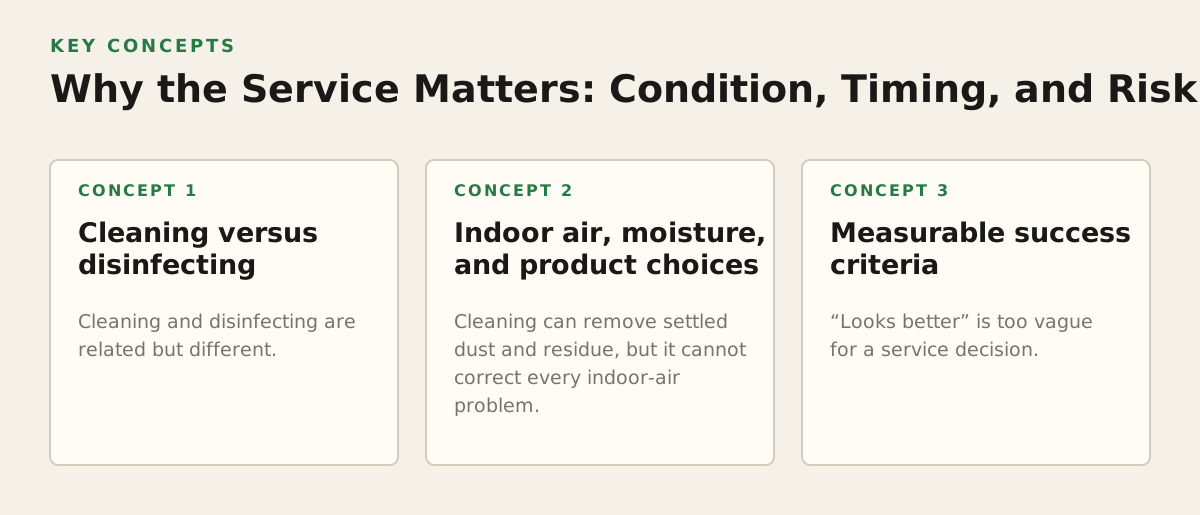
Deep cleaning matters because ordinary cleaning has a maintenance rhythm. When a home misses several visits, soil compounds in places that are not visible from the center of a room. Grease attracts more dust, soap residue becomes harder to remove, and clutter blocks access. The practical objective is to restore cleanable surfaces to a condition that recurring service can maintain.
There are also timing reasons to choose a one-time service. A Charleston household may need a reset after a long work season, before guests arrive, after a tenant leaves, or before a home is photographed and shown. The decision should be based on the property’s condition and deadline, not on the label alone.
Cleaning versus disinfecting
Cleaning and disinfecting are related but different. Cleaning removes dirt and many germs from surfaces; disinfecting uses a product intended to kill certain germs on a surface when used according to its label. The Centers for Disease Control and Prevention recommends cleaning surfaces first when they are dirty and reserving disinfection for situations where it is appropriate, such as when someone is sick or at higher risk. See the CDC guidance on cleaning and disinfecting homes for the distinction and product-use precautions.
That distinction affects what you should ask for. If a provider says “sanitized,” ask what process that means, which surfaces are included, and whether the product must remain wet for a specified contact time. A general deep clean is not automatically a medical, biohazard, or hospital-grade disinfection service.
Indoor air, moisture, and product choices
Cleaning can remove settled dust and residue, but it cannot correct every indoor-air problem. Moisture intrusion, leaks, poor ventilation, pests, and damaged building materials need separate attention. EPA guidance on indoor air quality discusses source control, ventilation, and moisture management as parts of a broader strategy rather than treating surface cleaning as a complete solution. EPA’s home indoor-air-quality guidance provides that distinction.
Product selection is another evaluation point. If your household has fragrance sensitivities, infants, pets, or a preference for specific products, say so before booking. Ask whether the provider can use customer-supplied products, fragrance-free options, or products carrying the EPA’s Safer Choice label. That label does not mean a product is suitable for every surface or person, so the cleaning plan still needs to account for material compatibility and ventilation.
Measurable success criteria
“Looks better” is too vague for a service decision. Establish observable outcomes before work begins. Examples include:
- Kitchen: Grease and food residue removed from the agreed cabinet fronts, backsplash, counters, sink, and appliance exteriors.
- Bathrooms: Soap residue and ordinary surface soil removed from the agreed fixtures, tile, glass, floors, and exterior toilet surfaces.
- Bedrooms and living areas: Reachable dust removed from agreed trim, doors, furniture surfaces, and floors.
- Move-out: Empty rooms, cabinets, floors, and fixtures match the landlord’s or property manager’s written checklist.
- Recurring readiness: The home is sufficiently accessible that the next visit can focus on maintenance rather than recovering neglected areas.
These criteria are not a guarantee that every stain disappears. Etched glass, rust, damaged grout, paint wear, and permanent discoloration may remain after thorough cleaning. A responsible provider distinguishes removable soil from permanent damage before work starts.
How to Choose the Right Service Type
The best choice depends on the job to be done, the home’s current condition, and how much preparation you can handle. Use this decision table before requesting estimates.
| Buyer need | Best-fit service | Main trade-off |
|---|---|---|
| The home has months of accumulated detail work but is occupied | One-time deep cleaning | More time and preparation than a recurring visit; furniture and clutter can limit access |
| You want a clean baseline that stays manageable | Deep cleaning followed by recurring residential cleaning | Requires an ongoing schedule and consistent access |
| You are moving into an empty home | Move-in cleaning | Must be scheduled before boxes and furniture reduce access |
| You are leaving a rental or listing a property | Move-out cleaning | Scope should follow the lease, inspection sheet, or listing expectations |
| You manage several homes or frequent turnovers | Recurring or coordinated multi-property service | Needs reliable access, standardized checklists, communication, and scheduling capacity |
| A sick occupant, hazardous material, or extensive mold is involved | Specialized remediation or disinfection provider | Ordinary residential cleaning may not have the training, equipment, or authority for the problem |
Budget and pricing-model questions
Do not compare quotes by total alone. Compare the scope, assumptions, and pricing model. Residential cleaning companies may price by flat rate, home size, bedroom and bathroom count, estimated labor, condition, frequency, or add-ons. A flat-rate quote can be easier to approve when the scope is clearly defined. An hourly quote may be appropriate when the condition is uncertain, but ask what happens if the allotted time ends before the checklist is complete.
Ask these questions before treating a quote as final:
- Is the estimate based on square footage, rooms, condition, labor time, or a combination?
- Does the price cover one visit or a recurring schedule?
- What assumptions were made about clutter, pet hair, grease, and access?
- Are inside appliances, blinds, interior windows, and cabinets included?
- Are taxes, supplies, travel, parking, lockout, or cancellation charges handled separately?
- What happens if the property is substantially different from the description?
- Can the buyer receive the scope and price in writing before committing?
A buyer can set an illustrative starting policy rather than relying on a universal budget rule. For example, a property manager might require a written checklist, photos of completed rooms, and approval before any add-on work. A busy household might choose a flat-rate deep clean first, then request a recurring quote based on the actual maintenance condition. These are planning examples, not market-wide pricing standards.
Delivery and implementation burden
The customer’s preparation affects both outcome and cost. Cleaners cannot thoroughly clean a countertop covered with mail, appliances, dishes, and personal items without either moving those items or limiting the work. Occupants also need to decide whether they will remain home, secure pets, provide parking instructions, and identify fragile or off-limits items.
For a smoother appointment:
- Remove valuables, medication, documents, and fragile objects from work areas.
- Put away clothing, toys, dishes, and loose household items when possible.
- Identify rooms that are included, excluded, or locked.
- Secure pets and provide instructions for alarms, gates, elevators, and parking.
- Share the move-out checklist, access code, or property-manager requirements before the appointment.
- Reserve time for a final walkthrough or prompt issue report.
For a multi-home portfolio, the burden is operational. Someone must coordinate keys, arrival windows, property condition, owner instructions, photos, invoices, and re-clean requests. A vendor that cleans one home well may still be a poor fit if it cannot manage the communication system surrounding several homes.
Where Deep Cleaning Breaks Down
Most disappointing results come from a mismatch between the requested outcome and the actual conditions. A deep clean is detailed labor, not a magic eraser. The earlier the limitations are identified, the fewer disputes occur.
Access, clutter, and unrealistic scope
Access is the first constraint. A cleaner cannot dust beneath a heavy sofa, wipe the back of a packed cabinet, or clean an occupied countertop without access. If the customer expects decluttering, organizing, laundry, dishwashing, or furniture moving, those tasks need to be separately defined.
Condition is the second constraint. Years of grease, mineral scale, pet accidents, smoke residue, construction dust, and neglected grout may require specialized treatment or repeated work. Some materials can be damaged by aggressive chemicals or abrasive tools. A professional should explain what is safe for painted walls, natural stone, finished wood, delicate fixtures, and specialty flooring.
Safety and contamination boundaries
Ask where the company draws its safety line. Ordinary house cleaning should not be presented as a solution for sharps, sewage, extensive animal waste, bloodborne contamination, active infestation, or major mold growth. The correct response may be a specialized contractor, remediation company, pest professional, or property owner’s risk procedure.
Ventilation and chemical handling also matter. Never assume that combining products improves cleaning; it can create dangerous fumes or damage surfaces. EPA’s consumer guidance on disinfectants emphasizes following the product label, including directions for use and safety precautions. EPA’s disinfectant information is a useful reference when a provider proposes a specific disinfecting product or claim.
Red flags during vendor evaluation
- No written scope: The company promises “everything” but will not state what rooms, surfaces, or add-ons are included.
- Unclear pricing changes: The initial quote is attractive, but the process for condition-based surcharges is not explained.
- Unverifiable claims: The provider uses terms such as “hospital clean” or “chemical-free” without defining the process.
- No access plan: The company has not asked about pets, parking, alarms, keys, elevators, or occupancy.
- Pressure to book immediately: You are asked to pay or commit before receiving the service details.
- Unsafe guarantees: The provider promises to remove every stain, mold problem, odor, or allergen regardless of the material or cause.
- No correction process: There is no clear method for reporting an omitted item or requesting review.
A low quote is not automatically a red flag, and a high quote is not proof of quality. The meaningful question is whether the vendor’s assumptions match the property and whether the buyer can verify completion.
How Practitioners Apply the Service
A reliable cleaning engagement has a sequence. It starts with discovery, turns the discovery into a defined scope, performs the work in a logical order, and closes with verification. This process is more useful than choosing based on a generic room list.
1. Inspect the job before promising the result
The provider should ask about home size, occupancy, condition, pets, flooring, bathrooms, kitchens, access, and deadline. Photos can help when an in-person walkthrough is impractical, but they may not show odor, hidden buildup, or blocked surfaces. For a move-out, the lease or inspection checklist should be part of the brief.
Use an illustrative job brief such as: “Two-story occupied home; three bedrooms and two bathrooms; kitchen has visible cabinet-front grease; one dog; no interior windows; customer wants reachable baseboards and doors; service must occur before guests arrive.” That is more actionable than “deep clean my house.”
2. Convert the brief into a room-by-room scope
The scope should identify tasks, exclusions, and assumptions. It should also note whether the customer must empty cabinets, remove clutter, or supply access. A useful checklist separates included work, optional work, and work requiring another specialist.
For example, a kitchen scope might include counters, backsplash, sink, faucet, cabinet fronts, exterior appliances, floors, and reachable trim. Optional work might include the inside of the oven, refrigerator, and cabinets. Specialized work might include removing construction adhesive, repairing damaged flooring, or addressing an active pest issue.
3. Sequence the labor
Cleaning is not just a list of isolated actions. The order prevents rework. Many teams work from higher surfaces toward lower surfaces, from cleaner areas toward dirtier ones, and from dry soil removal toward damp cleaning. Bathrooms and kitchens need enough dwell time for appropriate products, while floors are generally completed after overhead and surface work.
For a vacant move-in clean, the sequence may be especially efficient because cabinets, closets, floors, and corners are accessible. For an occupied home, the cleaner may need to work in zones, ask the customer to release one room at a time, or leave inaccessible sections for a later visit.
4. Verify with observable checks
Verification should happen against the agreed scope, not an impossible standard of perfection. A customer or manager can inspect each included room for missed reachable surfaces, remaining ordinary soil, and excluded items that were mistakenly expected. For a portfolio, time-stamped room photos or a digital checklist may help create a consistent record, provided privacy and property policies allow it.
An illustrative quality check for a three-bedroom move-out could include:
- 3 bedrooms checked for floors, reachable trim, doors, and closet interiors
- 2 bathrooms checked for fixtures, mirrors, floors, and exterior cabinet surfaces
- 1 kitchen checked for counters, sink, backsplash, appliance exteriors, cabinet fronts, and floor
- All included rooms checked for visible trash, ordinary dust, and missed high-touch surfaces
The numbers in this example describe a workflow, not a universal service standard. The actual checklist should follow the home and the written agreement.
5. Turn a reset into a maintenance plan
After a deep clean, ask what caused the backlog. Was it frequency, clutter, pets, occupancy, seasonal dust, renovation work, or a missed move-out deadline? The answer determines the next step. A recurring schedule may control routine soil; it will not replace decluttering, repairs, moisture correction, or specialty treatment.
For Charleston-area households comparing providers, a practical process is to request written scope and pricing from qualified companies, compare assumptions rather than slogans, and choose a service category that matches the property’s actual condition. BeeLux Cleaning offers flat-rate residential options for house cleaning in Charleston, along with one-time and recurring approaches that can be discussed around the home’s needs.
Questions to Ask Before You Book
Use this vendor interview checklist whether you are a homeowner, renter, property manager, or busy professional arranging service for someone else:
- What exactly is included in the deep-cleaning scope?
- Which items are add-ons or excluded?
- How do you price condition, size, frequency, and extra rooms?
- Will I receive the price and scope before committing?
- What preparation do you require from occupants?
- How do you handle pets, keys, alarms, parking, and access delays?
- What surfaces or conditions will you not clean?
- How do you protect delicate materials and prevent product damage?
- What does “disinfecting” mean in your process, if offered?
- How do you handle a missed item or scope disagreement?
- For move-out work, can you follow my landlord’s or manager’s checklist?
- For multiple properties, how are schedules, notes, photos, and invoices coordinated?
Choose the provider that gives specific answers and sets realistic boundaries. For a first appointment, clear scope and transparent assumptions are more valuable than a broad promise. If you need a Charleston-area reset, move-in or move-out service, or a recurring plan after the initial work, review the details of deep cleaning in Charleston and select the option that fits your property’s condition and access requirements. BeeLux Cleaning provides residential cleaning, deep cleaning, and move-related services in Charleston and surrounding Lowcountry communities; learn more through BeeLux Cleaning before booking.
Authored with NotFair SEO