
Blog
Move In Deep Cleaning Service: A Practical Charleston Buyer’s Guide
A move in deep cleaning service prepares an empty or nearly empty home for the people who will live there next. It goes beyond a quick surface tidy by addressing accumulated soil, dust, grease, bathroom buildup, and overlooked areas before furniture and boxes make access difficult. For Charleston-area renters, homeowners, landlords, and property managers, the useful question is not simply “How much does cleaning cost?” It is “What condition must the home reach, what work is included, and who is responsible for the parts the cleaner cannot safely or reasonably handle?”
What a move-in deep cleaning service actually is
Move-in cleaning is a one-time reset performed before occupancy. A deep version applies more time and attention to neglected or hard-to-reach surfaces than a routine recurring visit. The property may be vacant after a previous resident leaves, newly renovated, or still occupied by a seller or tenant who needs selected rooms cleaned in stages.
The service usually combines three categories of work:
- Routine residential cleaning: vacuuming, mopping, dusting, wiping reachable surfaces, cleaning bathrooms, and cleaning the kitchen.
- Deep-cleaning tasks: detail work around baseboards, doors, trim, fixtures, cabinet fronts, appliances, grout lines, vents, and other areas that do not receive attention every week.
- Turnover preparation: removing traces of the prior occupant’s use so the next occupant can begin with a clean, usable home.
Those categories overlap, but they are not interchangeable. A recurring house cleaning visit is designed to maintain a reasonably orderly home. A move-in deep clean is designed to establish a starting condition. A move-out clean is designed to meet a landlord, buyer, or listing handoff standard. A post-construction clean may involve fine dust and contractor debris that require a separate scope and different precautions.
Which buyer situation does each service fit?
New homeowners often want the kitchen, bathrooms, floors, closets, and interior surfaces cleaned before delivery day or before furniture arrives. The priority is access: an empty home gives the cleaner a better chance to reach floors, corners, cabinet interiors, and the spaces behind appliances.
Renters moving into an apartment or house may need a documented baseline. They should ask whether the service includes inside cabinets, the refrigerator, the oven, blinds, and other areas that affect daily use. If the property manager has already promised a turnover clean, the renter should first clarify what will be corrected by management rather than paying twice.
Renters or owners moving out need a different outcome. The cleaning must follow the lease, sales agreement, or property manager’s checklist. A buyer’s preferred deep-clean scope may not be the same as a landlord’s inspection standard, and neither automatically includes carpet replacement, painting, trash hauling, or repairs.
Landlords and property managers need repeatable scope and scheduling. For several homes, consistency matters more than an impressive one-off promise. Ask for room-by-room inclusion, exclusions, access procedures, lock or key handling, and a process for reporting damage or unresolved work.
Busy families and professionals may want a deep clean first and recurring house cleaning in Charleston afterward. That pairing can make sense when the initial visit establishes the baseline and later visits focus on maintenance rather than repeating every detail-intensive task.
Why timing and condition matter more than the label
The same home can require very different labor depending on when it is cleaned. Cleaning an empty property before movers arrive is usually more straightforward than cleaning after beds, bookcases, boxes, and kitchen equipment are in place. The difference is not merely cosmetic: objects reduce access, create extra handling, and force a cleaner to work around rather than across a surface.
Deep cleaning also matters because certain soils become harder to remove when they are left undisturbed. Cooking grease collects on cabinet faces and range hoods. Soap residue builds around plumbing fixtures. Dust gathers along trim and under radiators or furniture. In a humid coastal climate such as Charleston’s, moisture-related discoloration deserves careful inspection rather than an assumption that every mark is ordinary dirt.
Cleaning and disinfecting are not identical tasks. The Centers for Disease Control and Prevention explains that cleaning removes dirt and impurities, while disinfecting uses products intended to kill germs on surfaces; it also recommends following product directions and cleaning surfaces before disinfecting when disinfection is needed. See the CDC’s current household guidance for the distinction and product-use precautions: CDC cleaning and disinfecting guidance.
Set a measurable handoff standard
“Deep cleaned” is too vague to evaluate by itself. Before booking, translate the desired result into observable conditions. For example:
- Kitchen counters and cabinet fronts are free of visible crumbs, grease film, and loose dust.
- Bathroom fixtures have no visible hair, soap residue, or ordinary surface soil.
- Floors are vacuumed or mopped according to their material and are free of loose debris.
- Interior cabinet shelves are included if the cabinets are empty and the quote says interiors are covered.
- Baseboards, doors, handles, and reachable trim have been wiped rather than merely dusted from a distance.
- Any excluded issue—such as paint, permanent staining, mold remediation, pest waste, or damaged caulk—is identified rather than silently treated as unfinished cleaning.
These are acceptance criteria, not a guarantee that every stain can be removed. A professional cleaner should distinguish removable soil from discoloration, etching, rust, failed sealant, water damage, and material damage. That distinction protects the buyer from expecting restoration from a cleaning appointment.
Health, moisture, and product boundaries
If you see active leaks, widespread mold, sewage contamination, heavy pest waste, or damaged building materials, pause the ordinary cleaning plan. The EPA explains that mold control depends on moisture control and that larger or complicated mold problems may require professional remediation; its guidance is available through the EPA mold resource. A standard residential cleaning service should not be treated as a substitute for moisture repair, remediation, or hazardous-material handling.
Product selection also deserves a question. A household with children, pets, asthma concerns, natural stone, unsealed wood, or delicate finishes may need restrictions on fragrances, abrasives, acids, or disinfectants. The EPA’s Safer Choice program explains how it evaluates product ingredients against safety and performance criteria, but a label or certification does not remove the need to confirm surface compatibility and proper use.
How to compare service types, quotes, and trade-offs
Do not compare a low flat rate with a higher quote until you know whether both describe the same work. A flat rate can make budgeting easier when the home’s size, rooms, and condition fit defined parameters. An hourly model may be more transparent when the condition is uncertain, but the final total can be less predictable. A custom quote can account for unusual access, multiple kitchens, heavy buildup, or a large property, provided the assumptions are written down.
| Buyer need | Best-fit service type | Main trade-off |
|---|---|---|
| Clean, empty home before furniture arrives | Move-in deep cleaning | More detailed than routine cleaning, but may cost more than a maintenance visit because the initial condition is being reset. |
| Keep an already maintained home under control | Recurring residential cleaning | Efficient for maintenance, but usually not intended to restore neglected baseboards, cabinet interiors, or heavy buildup in one visit. |
| Meet a lease, sale, or property handoff requirement | Move-out cleaning | Works best when the provider receives the actual checklist; a generic scope may miss a property-specific requirement. |
| Address accumulated soil in selected rooms | One-time deep cleaning | Can focus budget on kitchens, bathrooms, or high-use rooms, but the entire property may not receive the same level of detail. |
| Remove fine dust after remodeling | Post-construction cleaning | Requires a construction-specific scope and may not include ordinary move-in details such as cabinet organization or personal-item handling. |
| Prepare several rental homes on a schedule | Property turnover cleaning | Repeatability and access coordination matter; a single-home quote may not describe multi-property scheduling or reporting. |
Questions that expose the real scope
Ask the provider to separate included tasks, optional tasks, and exclusions. A phrase such as “full kitchen” is not precise enough unless it states whether that means counters and appliance exteriors or also cabinet interiors, the oven, refrigerator, backsplash, light fixtures, and pantry shelves.
Use a room-by-room request. An illustrative scope for a vacant three-bedroom house might list:
- One kitchen, including either appliance exteriors only or specified appliance interiors.
- Two full bathrooms and one half bath, with shower walls, fixtures, mirrors, floors, and cabinet fronts identified.
- Three bedrooms, one living room, one dining area, one laundry room, hallways, stairs, and closets.
- Interior windows or blinds only if explicitly included, with the number of windows stated.
- Floors cleaned according to material, with carpet extraction, exterior windows, and garage work listed separately if needed.
The numbers in that example are not a universal package or price formula. They show how to make a quote comparable. A property with a similar bedroom count may still require substantially different labor because of square footage, floor type, cabinet quantity, access, buildup, or unfinished work.
Budget and pricing questions to ask in 2026
Before committing, ask:
- Is the price flat, hourly, or conditional on an in-person or photo-based assessment?
- What property details determine the quote: bedrooms, bathrooms, square footage, occupancy, condition, pets, stairs, or add-ons?
- Are supplies and equipment included?
- Are inside appliances, inside cabinets, blinds, baseboards, and interior windows included or optional?
- What happens if the home is dirtier than described or access is delayed?
- Is there a cancellation, rescheduling, lockout, or access fee?
- When is payment due, and is a receipt or written scope provided?
For budgeting, use a starting policy rather than an assumed industry benchmark: request two or three written scopes for the same rooms, then compare the total price, labor assumptions, exclusions, and scheduling risk. Do not choose solely by the lowest number. A cheap quote that excludes the oven, cabinet interiors, stairs, or heavy buildup may be a more expensive choice once add-ons are applied.
How the service is delivered from booking to handoff
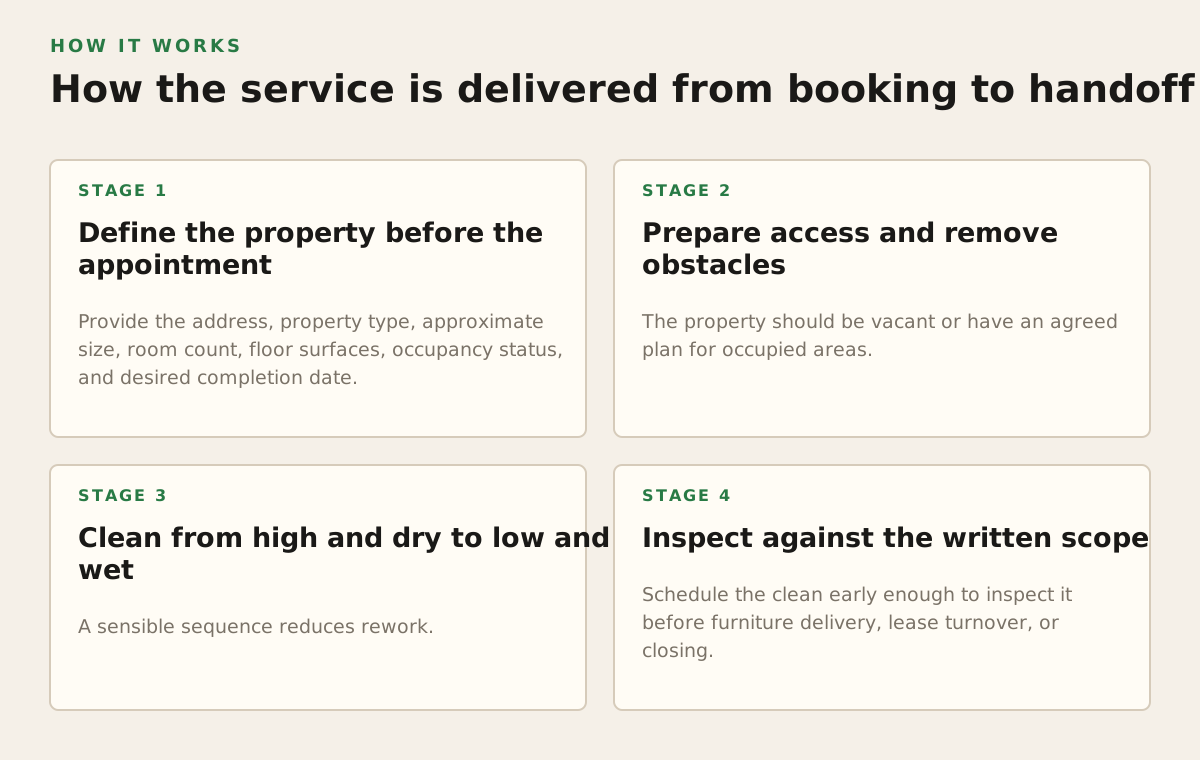
A dependable move-in clean is a small project, not just a longer version of weekly housekeeping. The work has a sequence, and the buyer has responsibilities that affect the result.
1. Define the property before the appointment
Provide the address, property type, approximate size, room count, floor surfaces, occupancy status, and desired completion date. Mention construction dust, pet hair, smoke residue, strong odors, pests, water damage, fragile surfaces, and unusually heavy buildup. Send the lease or property checklist if the clean is tied to a move-out or handoff.
Photos can help clarify condition, but they may not show odor, height, access, or buildup behind fixtures. If a quote depends on an assessment, ask what happens if actual conditions differ. The goal is not to force a provider to honor an inaccurate description; it is to prevent a surprise scope change at the door.
2. Prepare access and remove obstacles
The property should be vacant or have an agreed plan for occupied areas. Confirm who will provide entry, whether utilities are active, where parking is permitted, and how the cleaner should secure the home afterward. A cleaner cannot safely clean under boxes that are not moved, inside cabinets filled with dishes, or around personal items that the owner expects to remain untouched.
Use this preparation list:
- Remove movers, contractors, and personal belongings from rooms being cleaned.
- Empty cabinets, closets, refrigerators, and ovens if their interiors are included.
- Secure jewelry, cash, documents, medication, and fragile valuables.
- Keep pets out of the work area and identify any access restrictions.
- Make sure water and electricity are available unless the provider has confirmed otherwise.
- Tell the cleaner which surfaces are delicate, newly sealed, unpainted, or under warranty.
3. Clean from high and dry to low and wet
A sensible sequence reduces rework. Dust and soil from higher surfaces should not fall onto floors that have already been finished. In broad terms, a technician may work from high surfaces toward low surfaces, from dry soil removal toward damp wiping, and from less contaminated areas toward more contaminated ones. Bathrooms and kitchens then receive focused cleaning appropriate to their materials.
This sequence is a practical principle, not a promise that every provider uses identical steps. Ask how the service handles cross-contamination, cloths and tools, product dwell time, ventilation, and surface compatibility. If disinfection is requested, ask which surfaces qualify and whether the product must remain visibly wet for a stated contact time. Product labels, not guesswork, govern safe use.
4. Inspect against the written scope
Schedule the clean early enough to inspect it before furniture delivery, lease turnover, or closing. Walk through with the scope in hand. Look at the areas most likely to be missed or disputed: cabinet interiors, appliance edges, stair rails, doors, trim, shower tracks, floor corners, and closets.
Record exceptions with photographs and distinguish three conditions:
- Missed included work: a listed task was not completed.
- Excluded work: the condition was outside the agreed scope.
- Permanent or damaged condition: cleaning was attempted or is unsuitable because the material itself is stained, etched, broken, or deteriorated.
That classification makes a correction request specific. “The house still feels dirty” is difficult to act on. “The inside of the lower kitchen cabinets listed in the scope still has loose debris” gives both parties a clear question.
Where move-in deep cleaning breaks down
Most disappointing appointments are caused by a mismatch between the property, the scope, and the available time—not by a mysterious cleaning standard. A buyer can reduce that risk by identifying the failure mode before booking.
Occupied homes and moving-day traffic
When movers are carrying furniture through a home, cleaned floors can become dirty again and access can disappear. If cleaning must happen after delivery, divide the work into zones or reserve a final clean for open paths and rooms. Do not expect a cleaner to move heavy furniture, unpack boxes, or decide which possessions may be handled.
Renovation dust and unfinished work
Fine dust can settle repeatedly after sanding, cutting, painting, or installation. If contractors are still working, the property may need a construction-cleaning sequence followed by a final residential clean. Ask who removes adhesive, paint splatter, grout haze, packaging, and debris. Those may be specialty tasks rather than ordinary deep cleaning.
Stains, odors, and material damage
Cleaning removes soil; it does not reverse sun fading, scratched flooring, corroded fixtures, swollen wood, burned countertops, or failed grout. Odor can also originate in padding, drywall, drains, HVAC components, or moisture-damaged materials. A responsible provider should flag a limitation rather than apply increasingly aggressive chemicals to an unsuitable surface.
Mold, pests, and hazardous conditions
Visible mold growth, rodent droppings, needles, bodily fluids, infestations, or sewage require disclosure before scheduling. The ordinary service may be declined, narrowed, or referred to a qualified remediation or waste-handling professional. The EPA’s mold guidance emphasizes fixing the moisture source and using appropriate containment and cleanup decisions, not simply spraying a visible patch; review the EPA’s home mold-cleanup guidance before treating a cleaning quote as a remediation plan.
Unsafe expectations and vague guarantees
Be cautious when a provider:
- Promises that every stain, odor, or mold mark will disappear without inspecting the material.
- Cannot explain what “deep clean” includes or refuses to provide exclusions.
- Quotes a final total without asking about size, condition, occupancy, or access.
- Suggests mixing chemicals or using a product contrary to its label.
- Will not explain how complaints, breakage, lockouts, or missed tasks are handled.
- Pressures you to book immediately without giving enough information to compare the scope.
How Charleston households and property owners should apply the service
Apply the service to the decision in front of you, not to an abstract idea of cleanliness. A homeowner taking possession of a vacant house may prioritize cabinet interiors, bathrooms, floors, and the kitchen before deliveries. A renter may prioritize documentation and the landlord’s checklist. A property manager may prioritize standardized turnover notes, access, and a repeatable scope across homes.
Use a simple vendor interview checklist
Ask these questions in writing or during the booking call:
- What exact rooms and surfaces are included in the move-in deep clean?
- Are inside cabinets, closets, refrigerators, ovens, blinds, baseboards, and interior windows included?
- How is the price determined, and what facts could change it?
- What conditions are excluded or require a specialty provider?
- How should the home be prepared before arrival?
- What access, parking, water, electricity, and occupancy arrangements are needed?
- How are delicate materials, pets, fragrance sensitivities, and product restrictions handled?
- What is the process if an included task is missed?
- Can the appointment be scheduled before movers, closing, inspection, or tenant possession?
- Will the same scope work for future recurring visits or multiple properties?
The best answer is not necessarily the longest service description. It is the one that makes the result inspectable. You should be able to tell what will happen, what will not happen, what you must do first, and what happens when the property is materially different from the description.
Choose the cleaning level by the next event
If furniture arrives tomorrow, prioritize reachable surfaces and floors that must be ready immediately. If the home will remain empty for a week, include more detail work while access is excellent. If a tenant is taking possession, align the scope with the move-in condition report. If the property will be listed for sale, coordinate cleaning with photography and showings so foot traffic does not undo the result.
For a home that will be maintained after the initial reset, recurring service can be a practical second step. For a one-time restoration of neglected rooms, review the detailed scope for deep cleaning in Charleston and compare it with the specific tasks your property requires.
Make the recommendation based on risk, not just price
For most Charleston-area move-ins, the sensible starting point is a written, room-by-room move-in deep-clean scope scheduled after contractors leave and before furniture arrives. Add specialty work only when the condition calls for it, and do not use ordinary cleaning to stand in for mold remediation, repairs, junk removal, or post-construction treatment.
Before booking, compare the service’s scope, access requirements, exclusions, correction policy, and pricing model. BeeLux Cleaning offers flat-rate residential house cleaning, deep cleaning, and move-in or move-out cleaning in Charleston and surrounding Lowcountry communities, with online booking and pricing provided before commitment; review the available options through BeeLux Cleaning.
Authored with NotFair SEO