
Blog
House Cleaning Supplies: A Practical Shopping Guide for Charleston Homes
House cleaning supplies are not simply a collection of sprays, paper towels, and gadgets. A useful cleaning kit is a deliberately matched set of products, tools, protective equipment, and replacement supplies chosen for the surfaces, soil, and service you need to handle. The right kit helps a Charleston household maintain a recurring-cleaning routine, prepare a rental for inspection, or complete a deeper reset without buying products that create extra work.
This guide uses a practical framework: choose the cleaning action first, match the product to the surface, assign a tool to each task, and keep specialty items separate until a job actually requires them. That approach matters in humid Lowcountry homes, where tracked-in grit, bathroom residue, kitchen grease, pet hair, and hard-water marks may appear together but do not respond to the same treatment.
What belongs in a complete cleaning-supply system?
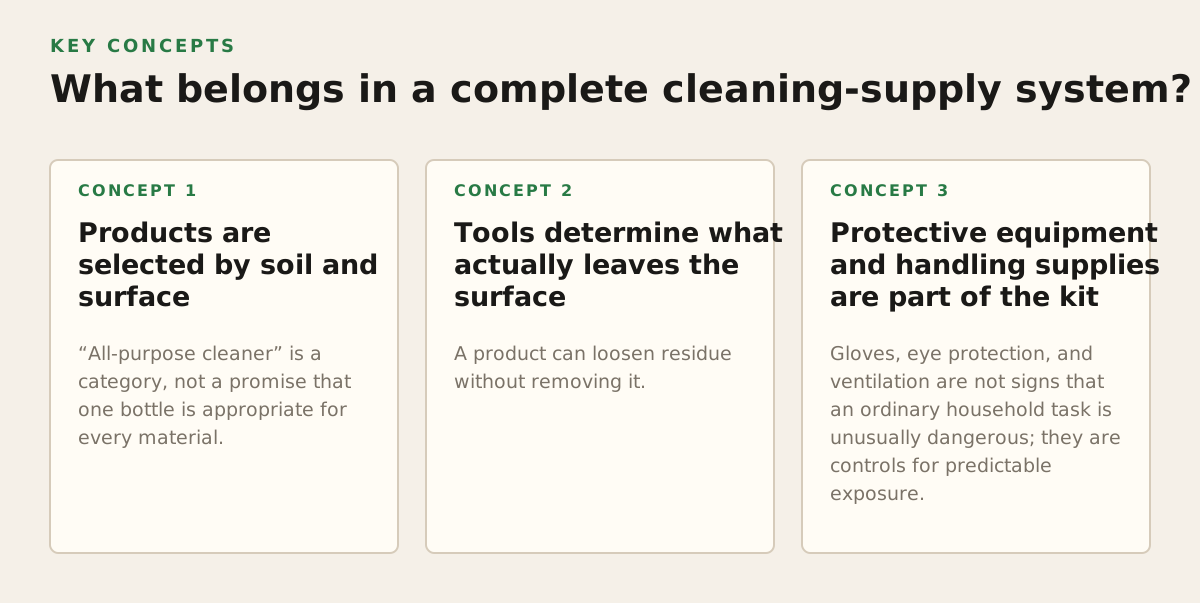
A complete system has four parts. Products dissolve or loosen soil; tools lift, contain, or remove it; protective equipment reduces contact with irritants; and supplies such as liners, bags, and replacement heads keep the process orderly. If one part is missing, the cleaner often compensates by applying too much product, scrubbing too aggressively, or using the wrong cloth.
Products are selected by soil and surface
“All-purpose cleaner” is a category, not a promise that one bottle is appropriate for every material. A neutral or mild cleaner may be suitable for painted walls, sealed counters, and many washable surfaces. A degreaser is designed for cooking residue. A glass cleaner is formulated to evaporate with limited streaking. An acidic descaler may help with mineral deposits, but it can damage acid-sensitive stone, grout, metal finishes, or certain coatings.
The important distinction is between cleaning and disinfecting. Cleaning removes dirt and many germs from a surface; disinfecting uses a product intended to kill certain microorganisms under specific label conditions. The Centers for Disease Control and Prevention explains when cleaning alone is generally appropriate and when disinfection may be useful in a home; its guidance also emphasizes following the product label. See the CDC’s current home guidance for the distinction: when and how to clean and disinfect your home.
That distinction prevents a common purchasing mistake: buying several disinfectants when the recurring job mainly requires soil removal. A disinfectant does not replace dusting, vacuuming, degreasing, or rinsing. It is a targeted step for an appropriate situation, not a universal finishing spray.
Tools determine what actually leaves the surface
A product can loosen residue without removing it. Microfiber cloths, non-scratch scrub pads, detail brushes, a vacuum with suitable attachments, a mop, and a dustpan provide the mechanical action that completes the job. Tool choice should follow the surface and soil: a soft cloth for glossy finishes, a brush for grout lines, a crevice attachment for edges, and a more absorbent cloth where liquid must be collected.
Keep tools organized by function rather than buying every available variation. A small brush for hinges and faucet bases is more useful than a large collection of novelty tools. A washable microfiber system can reduce disposable-wipe consumption, but only if cloths are laundered and stored so a dirty cloth does not migrate from a toilet area to a kitchen counter.
Protective equipment and handling supplies are part of the kit
Gloves, eye protection, and ventilation are not signs that an ordinary household task is unusually dangerous; they are controls for predictable exposure. The Occupational Safety and Health Administration describes personal protective equipment as equipment used to reduce exposure to hazards, including chemical hazards. Its personal protective equipment guidance is a useful reference when selecting protection for stronger products or repeated work.
For a basic household kit, protective and handling items may include:
- Reusable cleaning gloves in a size that does not split at the fingertips.
- Safety glasses for overhead spraying, scrubbing, or handling products that may splash.
- A washable apron or work clothes reserved for cleaning tasks.
- Trash liners, small bags for bathroom waste, and a sealable container for used cloths.
- Labels or a marker for identifying diluted solutions or refill bottles.
- A caddy or divided tote that prevents bottles from rolling together in a vehicle or closet.
Why the shopping list changes by type of service
The best supply list depends on the job’s endpoint. Recurring cleaning aims to keep a maintained home presentable with consistent effort. Deep cleaning addresses accumulated soil and neglected details. Move-in or move-out cleaning adds empty-room access, cabinet interiors, appliance interiors, and inspection-sensitive surfaces. Buy for the service frequency and finish standard, not for an imaginary all-purpose cleaning day.
Recurring cleaning: replenish, maintain, and prevent cross-use
For a maintained home, the essential kit should support dust removal, floor care, bathroom cleaning, kitchen soil removal, and waste handling. The recurring kit usually needs fewer specialty chemicals than people expect because regular removal prevents heavy buildup.
- One general-purpose cleaner appropriate for the home’s common washable surfaces.
- One bathroom cleaner selected for soap residue and the actual fixtures present.
- One kitchen degreaser for cooktop surrounds, cabinet fronts, and backsplash residue.
- One glass or mirror product, if the general cleaner leaves visible film.
- Microfiber cloths sorted by task, plus washable mop pads.
- A vacuum with floor, upholstery, and crevice attachments.
- A broom or hard-floor brush, dustpan, mop, bucket, and toilet brush.
- Gloves, liners, and a caddy for safe transport and storage.
A recurring client with pets may prioritize a strong vacuum, washable upholstery tools, and a lint or hair-removal tool over additional sprays. A household with mostly hard flooring may need extra mop pads and a reliable way to capture grit at entry points. The correct purchase is the one that addresses the home’s recurring soil load.
Deep cleaning: add access and detail tools
Deep cleaning is not merely “more of the same.” It exposes edges, seams, ledges, vents, cabinet tops, baseboards, and appliance gaps that routine work may not reach. The main additions are detail tools and appropriate access equipment, not a larger chemical collection.
- Soft detailing brushes for tracks, hinges, grout lines, and trim profiles.
- A crevice tool and narrow nozzle for appliance gaps and cabinet edges.
- Extension tools or a stable step stool for reachable high surfaces.
- Non-scratch pads for stuck-on residue, used only where the finish permits.
- A scraper designed for the relevant surface, with careful control around coatings.
- Extra absorbent cloths for rinsing and drying after heavier soil removal.
- Replacement vacuum filters or bags when the equipment manufacturer requires them.
Use a deep-cleaning checklist based on rooms and surfaces. For example, a kitchen list may include cabinet fronts, cabinet interiors if empty, hood filters, backsplash joints, the sides of appliances, and floor edges. A bathroom list may include fan covers, grout lines, shower tracks, vanity interiors, and the area behind the toilet. These are task decisions, not evidence that every home needs every specialty product.
Move-in and move-out cleaning: prioritize empty-space access
Vacant homes create a different opportunity: furniture no longer blocks baseboards, floors, cabinet interiors, or appliance sides. They also create an inspection risk. Dust inside drawers, residue on refrigerator shelves, fingerprints on doors, and debris in closets are easy to overlook because they are not part of the usual occupied-room sequence.
- Cabinet-safe cleaner and separate cloths for interiors and exterior faces.
- Vacuum attachments for closets, drawer tracks, floor edges, and appliance gaps.
- Glass tools for windows, mirrors, shower doors, and reflective appliance fronts.
- Extra floor-care supplies suited to the actual flooring, especially at edges.
- Sturdy bags for abandoned items or permitted waste, following the property’s rules.
- Painter’s tape or removable labels for noting areas that need owner, tenant, or maintenance attention.
- A small inspection light for dark corners, closets, and under-counter spaces.
For a landlord or property manager handling several homes, standardization has a different benefit: replacement supplies, labels, and task checklists can be kept consistent across properties. However, standardization should not mean using one chemical on every countertop or floor. Record the flooring and countertop materials before setting a recurring purchasing policy.
How to choose products without damaging surfaces
Cleaning products work through a combination of chemistry, contact time, agitation, and removal. When a result is poor, changing the product is not always the answer. The residue may need more dwell time, a better tool, a rinse, or a second pass with a surface-compatible method.
Start with the surface inventory
Before buying a specialty cleaner, list the materials in the home: sealed natural stone, engineered stone, laminate, stainless steel, finished wood, painted drywall, ceramic tile, vinyl, wood flooring, glass, acrylic, and fabric. Then check manufacturer care instructions where the material is valuable, recently installed, or unfamiliar.
Surface compatibility comes before cleaning strength. A powerful product that clouds a finish, strips a coating, discolors grout, or dulls stone is not a successful cleaning product. If the surface is uncertain, use the least aggressive compatible method and test it in an inconspicuous area according to the product’s directions.
Be especially cautious with:
- Natural stone, which may react poorly to acidic products.
- Unsealed wood or damaged finishes, where excess water can cause swelling or staining.
- Painted surfaces, which may burnish or lose sheen from abrasive scrubbing.
- Electronics and touchscreens, which require manufacturer-specific handling.
- Metal finishes, where abrasive pads or unsuitable chemicals can create permanent marks.
- Shower doors and coated glass, where aggressive scraping can damage the surface.
Read labels as operating instructions
A label is more than a list of ingredients. It may specify the surfaces for use, required dilution, ventilation, protective equipment, contact time, rinsing, storage, and disposal. Label directions define the product’s safe operating range. A concentrated product is not automatically better, and adding more cleaner can leave a film that attracts soil.
For disinfectants, the label is particularly important because the claimed use depends on the product, organism, surface, and required wet contact time. The U.S. Environmental Protection Agency maintains information about registered antimicrobial products and explains how its List N resources are organized; consult the agency’s disinfectant information rather than assuming that any cleaner or spray makes a disinfection claim.
Prefer products with clear directions and a surface list that matches the home. The EPA’s Safer Choice product information can also help shoppers identify products whose ingredients have been reviewed under that program’s criteria. That designation does not mean a product is appropriate for every material or task, so the label and surface instructions still control.
Never improvise chemical combinations
Do not mix bleach with ammonia, acids, or other cleaners. Poison Control explains that combining bleach with certain products can create hazardous gases and advises getting away from fumes and seeking help when exposure occurs. Its cleaning products and bleach guidance is a useful reference for household storage and exposure response.
Keep products in their original containers whenever possible, close caps after use, and store them away from children and pets. If a product is transferred for a legitimate reason, use a correctly labeled container that cannot be mistaken for a drink or food container. Ventilate the area and stop if there is coughing, eye pain, dizziness, or breathing difficulty; follow the product label and contact an appropriate medical or poison-information service.
Where cleaning supply systems break down
Most supply failures are process failures rather than shortages. A closet may contain plenty of bottles while still lacking a clean mop pad, a compatible tool, or a way to separate used cloths. Before adding another product, identify the failure mode.
Too many products create storage and residue problems
Buying a separate spray for every room can lead to duplicate ingredients, expired products, cluttered caddies, and accidental misuse. A smaller set of well-labeled products is easier to inspect and replenish. Keep specialty products for genuine needs such as heavy mineral buildup, oven residue, adhesive marks, or a material-specific care requirement.
One cloth or brush travels through every room
Visual cleanliness does not prove that a tool is hygienically appropriate for the next surface. Use separate tools, colors, or clearly marked batches for toilets, general bathrooms, kitchens, and dusting. Launder reusable cloths according to their material and the type of soil they collected. Separation reduces cross-use risk; it also keeps grease and bathroom residue from being spread onto otherwise clean surfaces.
The equipment does not match the building
A compact apartment with smooth floors may need a lightweight vacuum and small caddy. A large home with stairs, rugs, pets, and multiple bathrooms may need longer reach, more filters, extra cloths, and a way to move supplies between floors. Property managers may need duplicate kits so a missing bottle at one address does not delay work at another.
Common mismatch examples include:
- Buying a steam tool for a surface whose manufacturer does not permit heat or moisture.
- Using a household vacuum without a suitable filter for fine debris or pet hair.
- Choosing a short-handled mop for a home where repeated floor work requires awkward bending.
- Stocking disposable wipes but no plan for removing the residue they leave behind.
- Keeping only one pair of gloves for several jobs, causing delays when they tear or become contaminated.
These examples illustrate why a shopping list should include replacement capacity. A starting policy for one household might be two usable pairs of gloves, three clearly separated cloth groups, and two mop pads; that is an illustrative setup, not a universal requirement. Larger homes, recurring service, and move-out work may justify more.
How practitioners turn the list into a workable kit
Begin with a written room-and-surface inventory, then divide purchases into essential, optional, and job-specific categories. This keeps a recurring kit lean while making it easy to add the right tools for a deep clean or vacancy.
| Category | Essential starting items | Optional or job-specific additions |
|---|---|---|
| Products | General cleaner, bathroom cleaner, kitchen degreaser, glass product if needed | Descaler, oven cleaner, adhesive remover, stone-safe specialty cleaner, disinfectant for an appropriate use |
| Tools | Vacuum, microfiber cloths, mop, bucket, broom, dustpan, toilet brush, detail brush | Extension duster, upholstery tool, scraper, grout brush, inspection light, appliance-gap attachments |
| Protective equipment | Gloves, suitable work clothing, ventilation plan | Eye protection, apron, stronger chemical protection selected from label directions |
| Supplies | Trash liners, laundry bag for used cloths, caddy, labels, replacement mop pads | Extra filters, duplicate kits, moving-property bags, documentation labels, spare batteries |
Use task-based purchasing decisions
For recurring residential cleaning, spend first on reliable floor and dust tools, washable cloths, and products that match the home’s most common surfaces. For deep cleaning, add detail brushes, reach tools, and specialty products only after identifying the accumulated soil. For a move-out, prioritize cabinet and appliance access, inspection lighting, floor-edge tools, and enough bags and cloths to work through an empty property without returning to the store.
A practical purchasing sequence looks like this:
- Map the surfaces: record flooring, counters, fixtures, glass, painted areas, and unusual finishes.
- Map the soil: identify grease, soap film, dust, hair, mineral deposits, adhesive residue, and ordinary tracked-in dirt.
- Choose the least aggressive compatible product: escalate only when the soil and label support it.
- Assign a tool: select the cloth, brush, vacuum attachment, or mop that will physically remove the loosened soil.
- Create separation: mark bathroom, kitchen, and general-use cloths and store them apart.
- Plan replenishment: note which items are consumed, laundered, replaced, or checked before each visit.
Apply a small numeric starting policy, not a false universal standard
Numbers can make a kit actionable if they are labeled as examples. For a single maintained home, an illustrative starting policy could be 4 product categories, 3 cloth groups, 2 mop pads, 1 vacuum, and 1 labeled caddy. A deep-cleaning add-on might include 2 detail brushes, 1 crevice attachment, and 1 stable step stool if the home and equipment permit. A move-out add-on might include 1 inspection light, extra cabinet cloths, and additional liners.
Those quantities are planning examples, not performance promises or a substitute for the home’s size. A larger property, multiple crews, frequent turnovers, or a household with pets will change the replenishment rate. The useful question is whether every scheduled task has a compatible product, tool, protective measure, and disposal or laundering path.
Know when buying supplies is no longer the best decision
Homeowners and renters do not need to build a professional inventory for every occasional job. If the challenge is a one-time vacancy, extensive accumulated soil, multiple bathrooms, or a property that must be ready for a handoff, labor and access may matter more than owning specialty products afterward. Renting equipment can also create uncertainty about attachments, cleaning, and surface compatibility.
For households that want routine help, BeeLux Cleaning provides flat-rate residential service in Charleston and surrounding Lowcountry communities, with one-time and recurring options and pricing available before commitment. If you would rather assign the larger project to a service team, explore house cleaning in Charleston house cleaning in Charleston or deep cleaning in Charleston deep cleaning in Charleston.
For most homes, the specific recommendation is to build one clearly labeled essential kit first, then add specialty products only for a documented surface-and-soil problem. If the job is a move-in, move-out, or accumulated deep clean and purchasing the right equipment would be temporary, compare that supply cost and effort with booking BeeLux Cleaning through BeeLux Cleaning.
Authored with NotFair SEO