
Blog
Basic House Cleaning Checklist: A Room-by-Room Plan
A basic house cleaning checklist covers everyday clutter, dust, kitchen and bathroom surfaces, and floors, in an order that limits backtracking. Use the room-by-room tasks below to decide what belongs in a regular cleaning session, what to handle as needed, and what to save for a move or a more detailed clean.
The useful checklist is not the longest one: it is the one that fits how your household uses its rooms. A Charleston household keeping up between visits, a renter preparing to hand back keys, and a property manager turning over a home may need different scopes. Treat the routine below as a starting point, then adjust it for visible mess, surface-care instructions, and the time you have.
1. Set a realistic scope and cadence
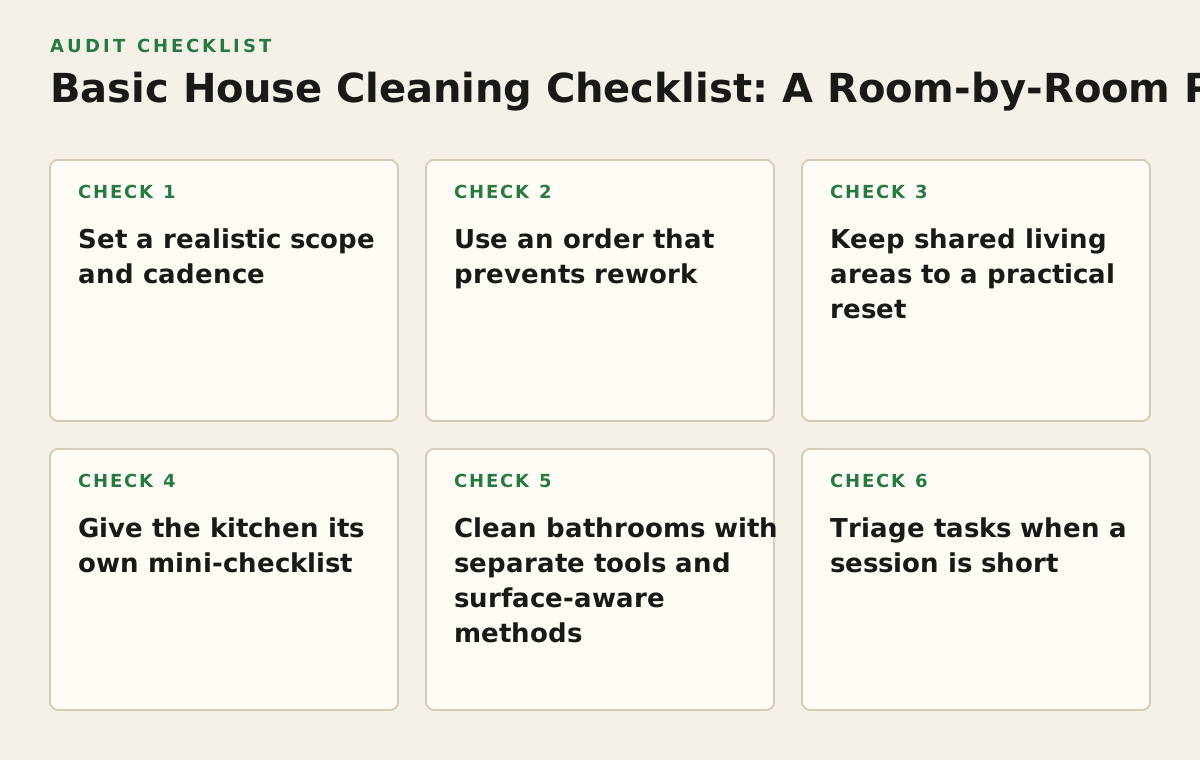
When it applies: Decide what a routine session should accomplish before assigning tasks to a day of the week. Regular upkeep handles recurring soil and clutter; a move-related clean may include empty spaces and areas usually blocked by belongings. Those are different jobs, and combining every possible detail task into every session can make the plan too large to repeat.
Why it works: A defined scope makes it easier to notice what is being missed. Start with shared, high-use rooms, then decide how often to revisit them based on the home’s condition. Children, pets, frequent cooking, or several people sharing a bathroom may change which areas need attention first, but no single schedule fits every household.
Choose tasks by use, not by room count
- Routine session: Reset visible clutter, clean the kitchen and bathroom surfaces in scope, dust or wipe commonly used surfaces, and finish the floors.
- As needed: Address fresh spills, a full rubbish bin, or a visibly soiled touchpoint rather than waiting for the next planned session.
- Occasional detail: Add a specific task, such as cleaning an appliance interior, when the condition or a planned move calls for it.
Failure mode: Giving a rarely used guest room the same time as a kitchen that is used every day. For example, a household can keep the guest room on a lighter rotation and bring it into the plan before visitors arrive. If you are considering outside help for recurring upkeep, BeeLux’s page for house cleaning in Charleston is a place to check the current service details and whether the scope fits.
2. Use an order that prevents rework
When it applies: Use the same work sequence across rooms, especially when time is limited or several people are sharing the checklist. Put away belongings first, clean higher surfaces before lower ones, handle fixtures and counters, and leave floors until the end. This order helps keep dust and crumbs from landing on areas already finished.
Why it works: Cleaning around clutter hides parts of a surface and creates extra passes. Keeping supplies together also reduces interruptions, but a caddy is only useful if products are appropriate for the surfaces being cleaned and stored safely away from food and children.
Follow a room-by-room sequence
- Reset: Put away loose items, collect dishes, and gather rubbish. Save reorganizing cupboards for a separate task.
- Dust and wipe: Work from higher surfaces toward lower ones, using a suitable cloth and method.
- Clean fixtures: Handle counters, sinks, and other room-specific surfaces.
- Finish the floor: Pick up remaining debris, then vacuum or sweep and use a method suitable for the floor material.
Failure mode: Vacuuming or sweeping before dusting and wiping. In a living room, that can leave fresh dust or crumbs on the floor, requiring another pass. Check care instructions before wetting delicate finishes, electronics, or flooring; the right sequence does not make an unsuitable cleaning method safe.
3. Keep shared living areas to a practical reset
When it applies: Use this list for bedrooms, hallways, and living spaces where everyday use leaves scattered belongings, fingerprints, and dust. Focus on accessible surfaces people actually use rather than treating every object as a deep-cleaning task.
Why it works: Clearing and wiping the main surfaces restores order without turning a routine session into a room-by-room reorganization. Follow care instructions for upholstery, electronics, and delicate finishes, and avoid applying liquid to an item unless its guidance allows it.
Living-area and bedroom checklist
- Return misplaced belongings to their usual homes and clear accessible surfaces.
- Dust furniture and wipe suitable hard surfaces where marks or dust are visible.
- Clean frequently handled items, such as a marked door handle or switch, with a compatible method.
- Make beds if that is part of the household’s reset; empty small bins when needed.
- Vacuum rugs or upholstered areas only as their care instructions allow.
Cleaning and disinfecting are not interchangeable steps. CDC guidance says that cleaning with soap or detergent and water removes many germs from surfaces; disinfecting may be appropriate in some circumstances, such as when someone is sick. Follow the label when disinfection is needed rather than assuming every routine wipe disinfects (CDC cleaning and disinfecting guidance).
Failure mode: Spraying every high-touch object without checking its material. For instance, a suitable wipe on a marked hard door handle may be appropriate, while misting a fabric cushion or electronic remote may not be. Choose the surface first, then the method.
4. Give the kitchen its own mini-checklist
When it applies: Use a separate kitchen pass because cooking creates crumbs, spills, and frequent contact with counters, sinks, and handles. The list is for routine upkeep; fresh food residue or a spill should be handled when it occurs, using a method suitable for the surface.
Why it works: A short, consistent pass catches mess near the work area before it spreads into adjoining rooms. Keep cloths clean and do not use the same soiled cloth across unrelated tasks. For food-contact surfaces, follow the product label and the surface’s care instructions.
Routine kitchen pass
- Clear dishes and rubbish; remove visible crumbs from the table and counters.
- Clean the sink and faucet, then wipe suitable counters and marked cabinet fronts.
- When the stovetop is cool, clean it according to its care instructions.
- Wipe frequently handled appliance and cabinet handles as needed.
- Sweep or vacuum visible debris, especially near food-preparation areas.
Failure mode: Carrying residue from one area to another with a cloth that has not been washed or replaced. Keep a clean cloth available, and use a separate one when a task or product calls for it. For an appliance interior or a surface with special care requirements, consult the manufacturer’s instructions rather than improvising a stronger cleaner.
5. Clean bathrooms with separate tools and surface-aware methods
When it applies: Include the sink, counter, toilet, tub or shower, mirror, and floor, adjusting the order and frequency to the room’s use and condition. Bathrooms may contain different materials and finishes, so a product suitable for one surface may be unsuitable for another.
Why it works: Separate tools for the toilet and other fixtures help avoid transferring soil. Starting with the less-soiled surfaces and leaving the floor until last also fits the overall room sequence. Read product directions and check surface-care guidance before treating stone, coated fixtures, or other sensitive finishes.
Bathroom routine list
- Move used items and rubbish so the sink and counter are accessible.
- Wipe the mirror and suitable counter surfaces.
- Clean the sink and faucet; use a dedicated tool for the toilet.
- Clean the tub or shower when needed, following product and surface directions.
- Finish with the floor, removing visible hair and debris.
Failure mode: Moving from the toilet to the counter with the same cloth or tool. Set toilet tools aside before cleaning other fixtures, and wash or replace cloths as appropriate. If a stain or buildup remains, identify the material and likely cause before switching to a stronger product; an aggressive cleaner can damage a finish without solving the underlying problem.
6. Triage tasks when a session is short
When it applies: Use a priority order when the whole list will not fit into the time available. Start with a spill or soil that could stain or create a slip risk, then address heavily used rooms and visible mess. Defer low-use detail work unless a particular event changes the job, such as preparing an empty property for a move.
Why it works: Triage directs effort toward current conditions rather than giving every room an equal share by habit. Use the table as a flexible decision aid, not a universal ranking: a specific spill or move-out requirement may change what comes first.
| Priority | Use it when | Example action | Usually defer |
|---|---|---|---|
| Fresh spill or soil | There is food residue, a spill, or debris that could cause damage or a slip | Clean the affected area using a suitable surface method | Do not delay a spill that could stain or create a hazard |
| High-use room | The kitchen or shared bathroom is visibly due | Clean the main counter, sink, fixtures, and floor | Low-use rooms if the session is short |
| Visible everyday mess | Dust, fingerprints, crumbs, or clutter are noticeable | Reset belongings, wipe suitable surfaces, and clean the floor | Hidden detail work with no current trigger |
| Occasional detail | A move, planned deep clean, or specific buildup calls for it | Choose one relevant detail task | Adding every detail task to every routine session |
Failure mode: Spending the available time on a low-impact task because it is easy to check off. If you have time for only a short reset, a sticky kitchen counter and shared bathroom fixtures may matter more than dusting a rarely used shelf. For a move, use the condition of the empty property and any applicable handover requirements to define the scope rather than relying only on a routine checklist.
7. Choose products safely and address the cause of recurring problems
When it applies: Choose a product based on the soil, surface, and task, and read its label before use. The EPA’s Safer Choice program identifies products that meet its criteria for safer chemical ingredients. Its label can help compare options, but it does not establish that a product is suitable for every surface or cleaning job.
Why it works: Following directions reduces guesswork about application and helps avoid using a product in a way its label does not support. Never mix cleaning products. Poison Control warns that some combinations, including bleach with ammonia-containing products, can release dangerous gases; use one product at a time and follow directions for use and ventilation (Poison Control guidance on products that should not be mixed).
Failure mode: Wiping a damp or stained patch repeatedly without addressing why it returns. EPA mold guidance emphasizes correcting the moisture problem as part of cleanup, not just treating the visible growth (EPA guidance on cleaning up mold in the home). If a damp area keeps returning or the issue is beyond routine cleaning, investigate the source and consider qualified help rather than adding stronger products.
For a one-time reset or a clean tied to moving, compare the needed work with the scope of deep cleaning in Charleston and verify current service details before deciding whether it fits. A recurring checklist remains useful for maintenance, but it is not a substitute for investigating persistent moisture, damage, or another underlying issue.
Put the checklist into practice in five steps
Build the plan around the rooms and conditions that actually shape the job. Keep routine tasks distinct from move-related or occasional details so the regular list stays usable.
- Map the rooms: List the kitchen, bathrooms, living areas, bedrooms, and any spaces with special surfaces or care instructions. Mark which rooms are shared or used most often.
- Choose a repeatable scope: Select tasks that fit the time available. Treat the cadence as a starting policy, then adjust if mess regularly remains between sessions.
- Write the work order: Use reset, high-to-low dusting and wiping, fixtures, then floors. Note where a separate cloth or tool is needed.
- Record exceptions: List delicate materials, product restrictions, or a specific move-related requirement. Check labels and manufacturer guidance instead of guessing.
- Review what was missed: After a few sessions, keep tasks that prevent recurring mess, move occasional details to a separate list, and change the scope of rooms that are consistently left dirty.
Start with the smallest routine that keeps the home acceptably clean, then expand it only when use or condition calls for more. BeeLux Cleaning provides residential, deep, and move-in or move-out cleaning in Charleston and surrounding Lowcountry communities, with one-time or recurring service; its website says customers can book online and receive pricing before committing. Check BeeLux Cleaning for current details and decide whether the service scope matches your home.
Authored with NotFair SEO